
New York's Moratorium Marks a New Phase in Data Center Politics
A Data Center Watch Report Update
On July 14, Governor Hochul signed an executive order to make New York the first state to impose a statewide moratorium on new hyperscale data centers. The move temporarily halts projects requiring more than 50 MW of electricity while state officials study their impacts on the electric grid, water resources, air quality, and climate goals. New York’s decision comes as more than 12 GW of large electricity-consuming projects in the state, including data centers, seek grid connections.
State legislatures across the country are increasingly debating statewide restrictions on large-scale data centers as AI-driven electricity demand accelerates. Fourteen state legislatures have introduced legislation restricting new data center development. To date, however, most restrictions have been enacted at the municipal level. New York is the first state to implement a statewide moratorium.
The executive order marks a significant shift in U.S. data center governance. Until now, restrictions on new data centers have largely been enacted at the local level, with counties and municipalities leading regulatory action. New York is the first state to use executive authority to pause large-scale AI infrastructure while evaluating how large-scale data centers should be regulated going forward.
The moratorium is only one part of a broader policy package that includes requiring hyperscale developers to contribute to grid upgrades, reconsidering tax incentives, and encouraging legislation that would further tighten requirements for future projects.
Maine nearly became the first state to enact a statewide moratorium earlier this year. Legislators approved an 18-month pause on new facilities exceeding 20 MW while a regulatory council studied impacts on grid reliability, electricity prices, and the environment. Governor Janet Mills vetoed the bill after lawmakers declined to exempt a proposed redevelopment project in Jay. Although the moratorium failed, Maine eliminated tax incentives for data centers and established an advisory council to develop statewide recommendations.
Why it matters:
The debate is shifting from local land use to statewide industrial policy.
Local governments initially led opposition to data centers. New York suggests that state governments are increasingly treating AI infrastructure as an issue of electricity planning, climate policy, and industrial strategy.
Moratoriums are increasingly being paired with broader regulatory reforms.
New York paired its moratorium with proposals addressing grid costs, tax incentives, and future siting requirements, suggesting the moratorium is part of a broader effort to reconsider how hyperscale facilities are regulated rather than simply delaying construction.
Politicians increasingly view data centers as an electoral issue.
Whether or not they were decisive, candidates in multiple states have publicly attributed election losses to their support for controversial data center projects. Candidates in multiple states have publicly linked election losses to their support for controversial data center projects, suggesting that elected officials increasingly perceive data center policy as carrying electoral consequences.
The politics of AI infrastructure are becoming more complex.
Governor Hochul has simultaneously promoted AI adoption within state government while supporting expanded oversight of the infrastructure that powers it, reflecting a growing distinction between supporting AI innovation and regulating its physical footprint.
New Report: Q1 2026
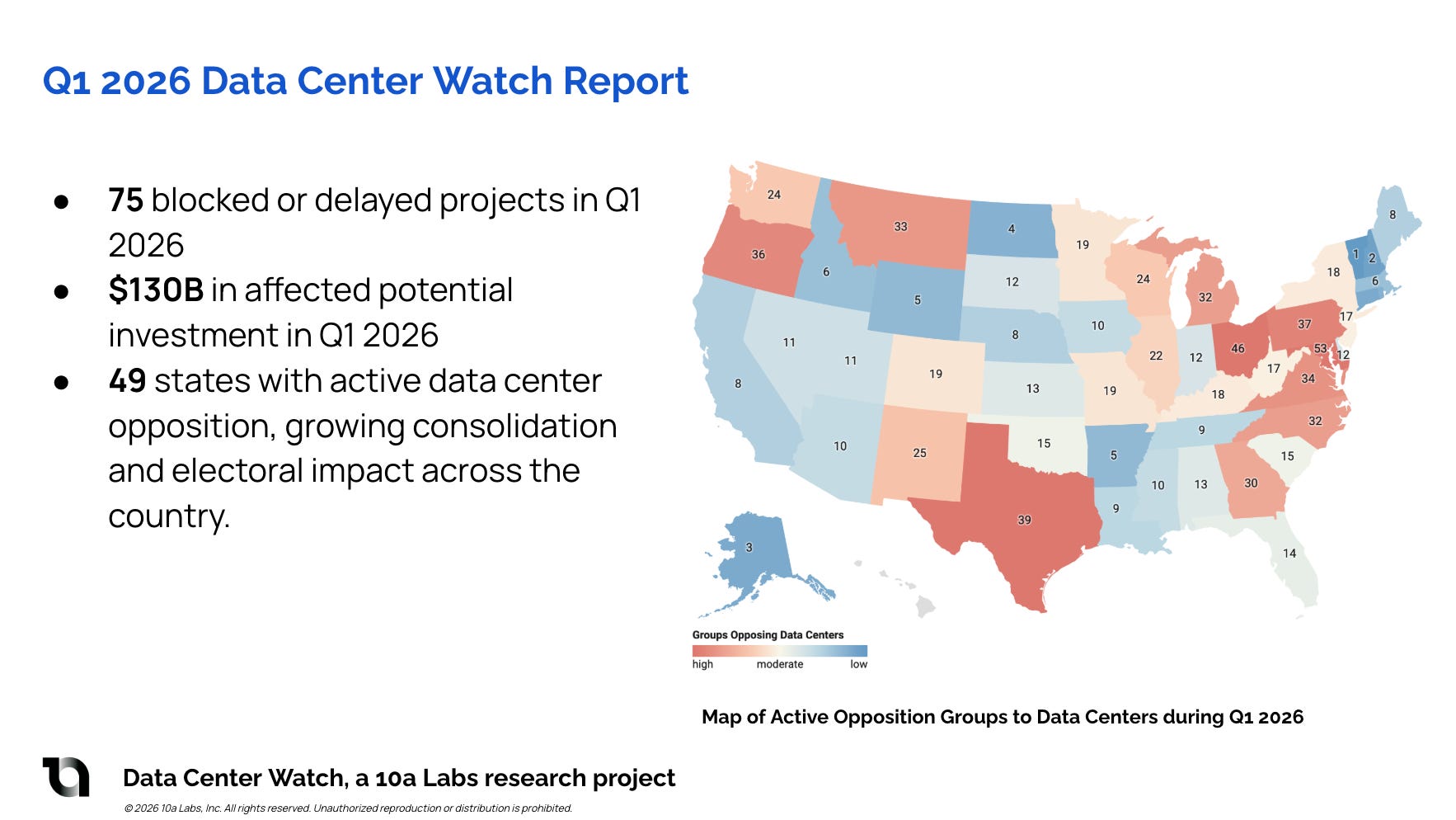
Data Center Watch has released its latest report covering developments in Q1 2026, analyzing the continued expansion of grassroots opposition, regulatory responses, and political debates surrounding data center development across the United States. The report provides updated data on blocked and delayed projects, emerging activist groups, and policy actions shaping the siting landscape.
The report is available for purchase. To learn more, contact us:
Thank you for the update. Much appreciated.
#Moratorium